Overlapping accounts, fragmented portfolio view
Turning connected wallet data into a hierarchy the business could trade, allocate, and report against.
saved per operations manager
double-counted balances
inherited by every page in the product
Starting Point: Integrated Data
Crypto assets scattered across wallets, exchanges, and protocols are linked via APIs to our platform. This case study picks up once the data is in: how does a trading desk make sense of it?
Manual Updates Block Live Portfolio Visibility
Users couldn't see live portfolio numbers because a complex, multi-layered structure required time-consuming manual updates, leading to delayed decisions and missed business opportunities in a fast-changing market.
Dynamic, Multi-Parent Portfolio Structures
Portfolios represent real business entities. These structures can change over time as the business does.
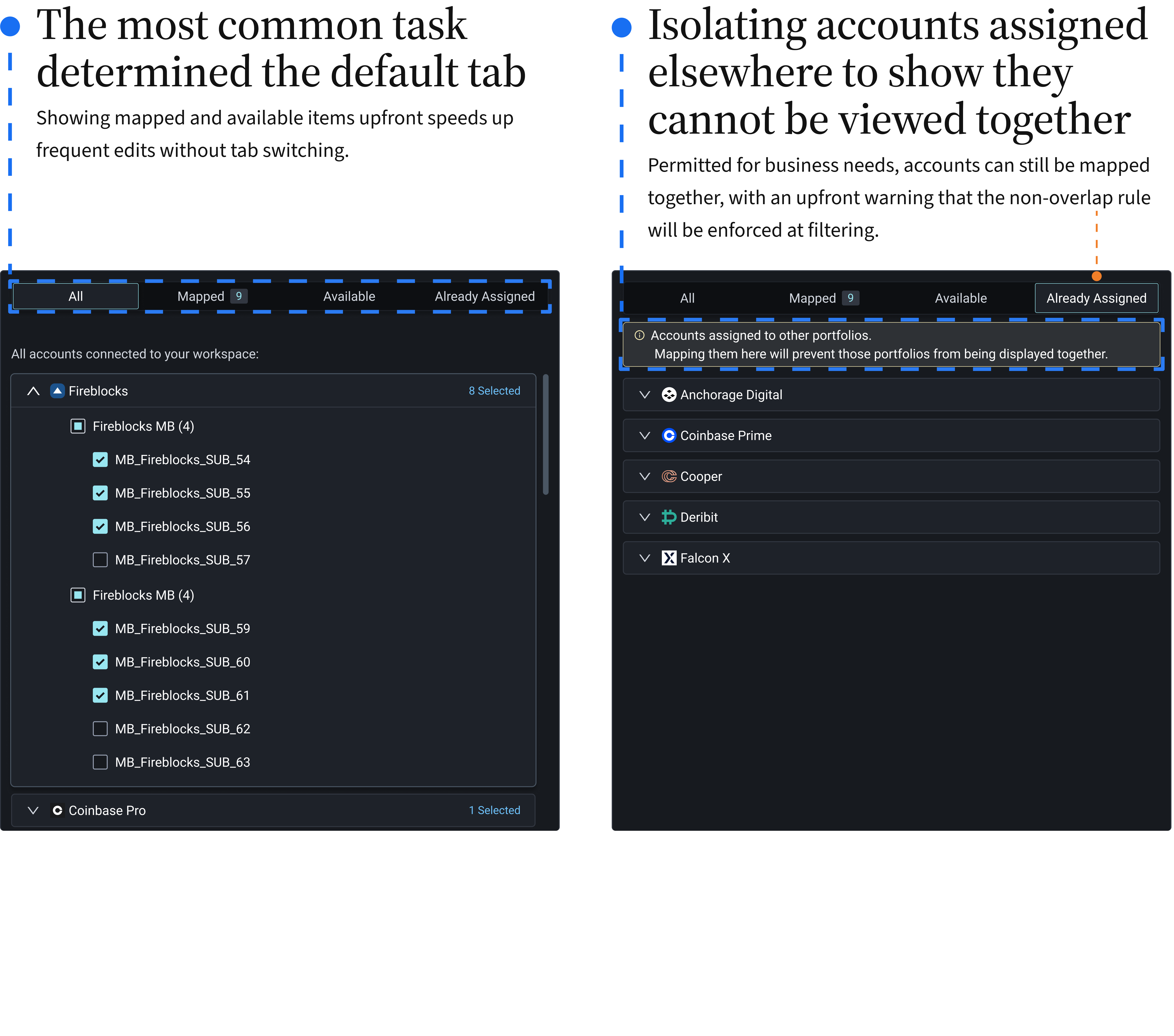
The same account can legitimately belong to more than one entity. For different business scenarios.
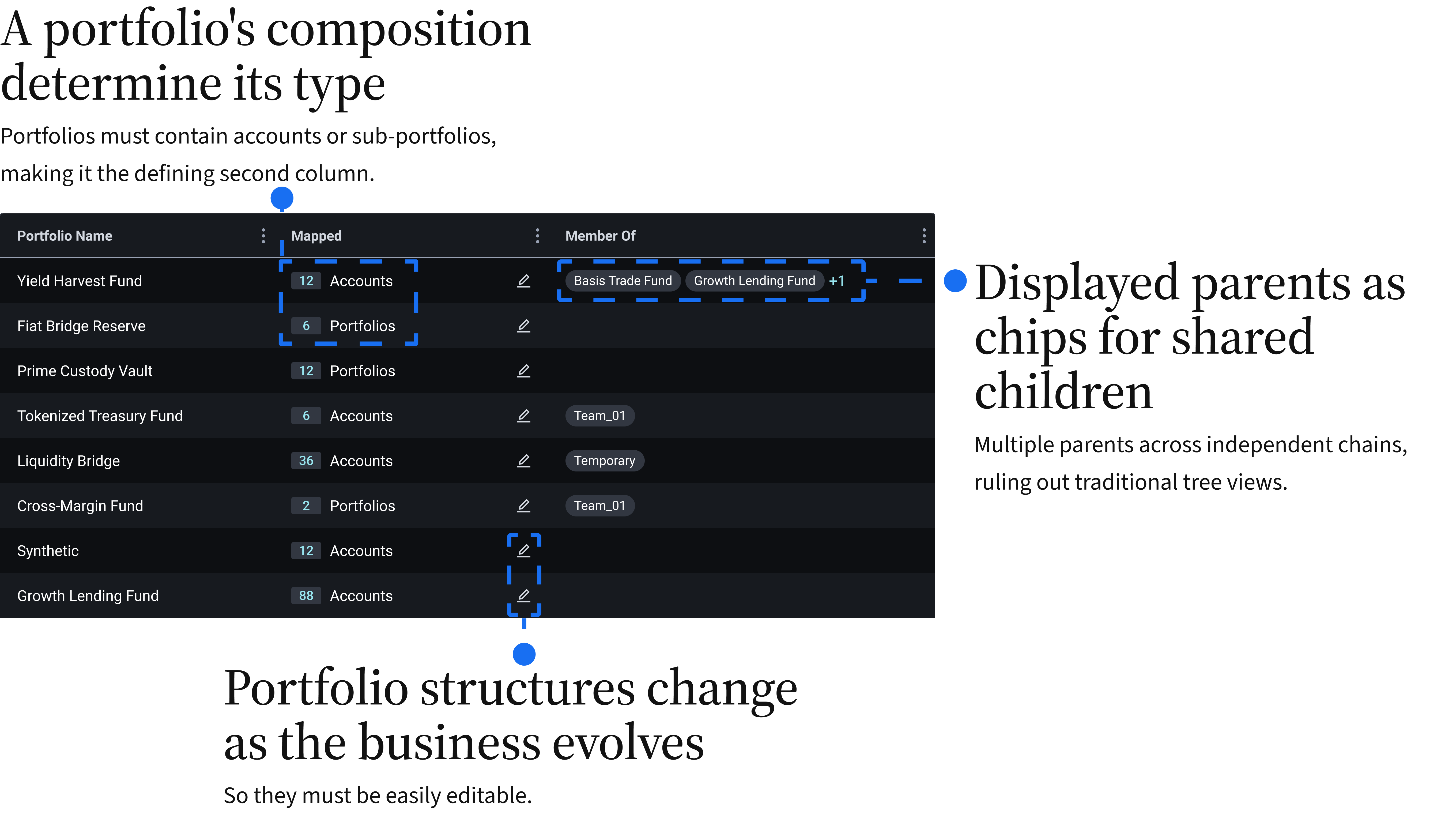
Portfolios aren't organized in a single hierarchy. At each level, a portfolio directly contains one type — accounts, or other portfolios. A portfolio can also have two parents, each in its own separate chain.
Portfolio as Filter, Controlled Overlap, and a Lean Table Solution
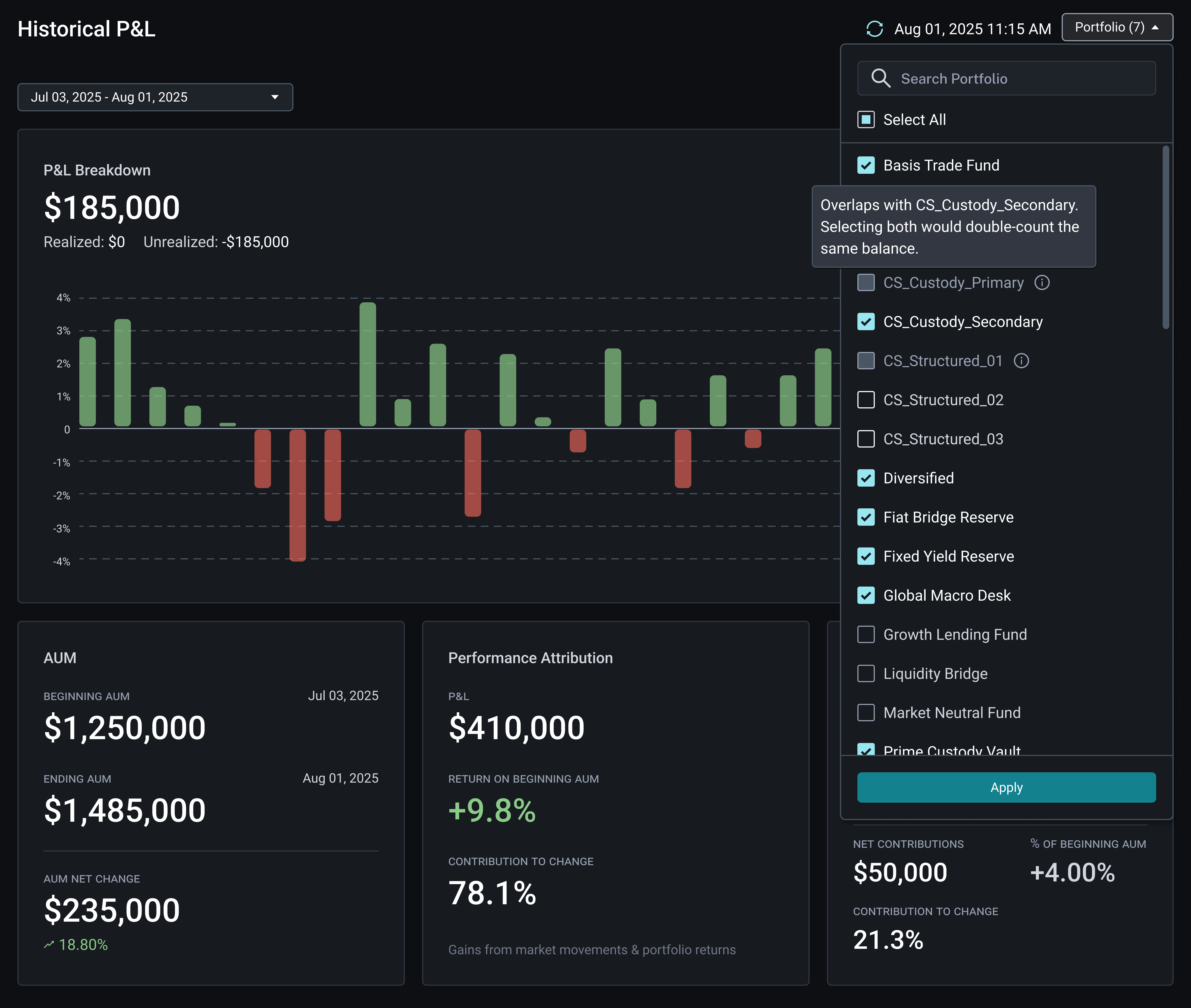
Portfolios as the primary data lens: All system analytics resolve through portfolios.
An account can be mapped to more than one portfolio, but never viewed through two at once.
Lean table solution: Represents the structure + makes it easy to create and edit existing portfolios.
Dynamic, Multi-Parent Structure
We used a table instead of a tree or diagram for two reasons:
—Flexibility: Supports portfolios with multiple parents across chains.
—Speed: A fast, simple solution to keep the project moving under a tight schedule.
Resolving Overlap at Mapping
Creating or editing portfolios opens a side drawer over the table, preserving context for frequent updates.
Error Prevention: Disabling the Overlap at the Point of Selection
Selecting a portfolio disables shared-account portfolios to prevent double-counting.
Saved per operations manager in manual reconciliation.
Unlocked with the design partner, by proving the technical precision the partnership needed.
The object-mapping system every page in the product now runs on, reusing the same hierarchy and filtering logic.